About Red Lily Fish
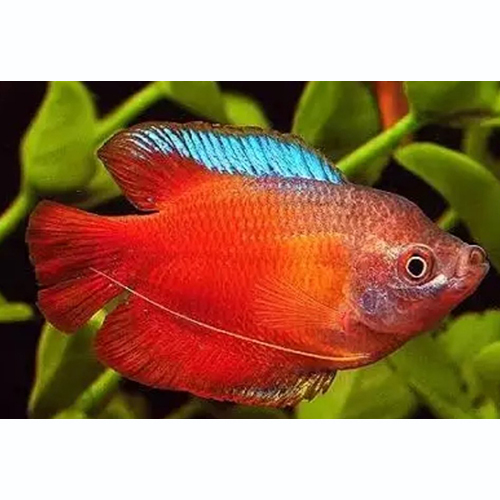
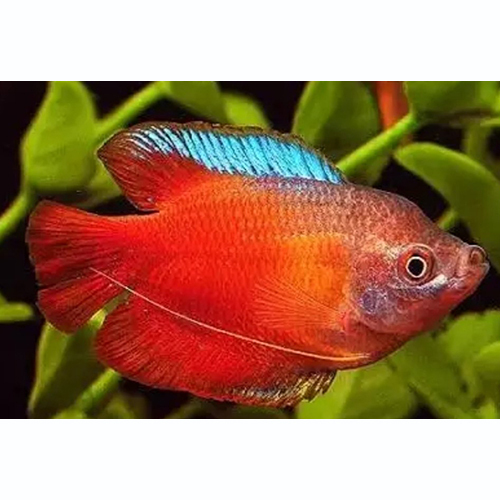
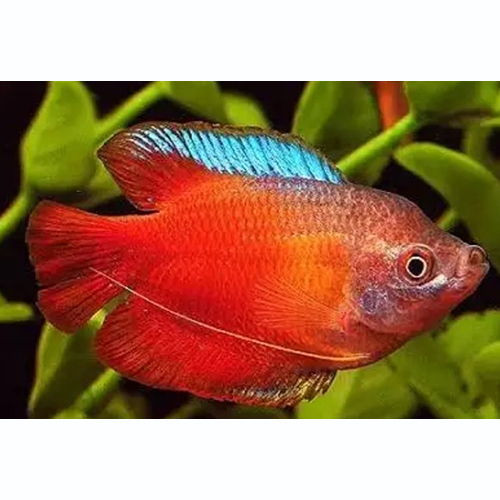
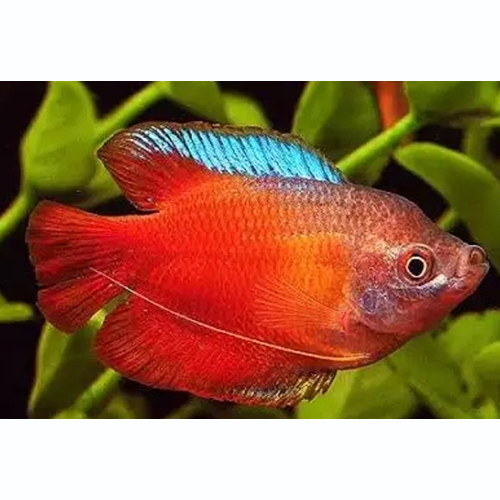
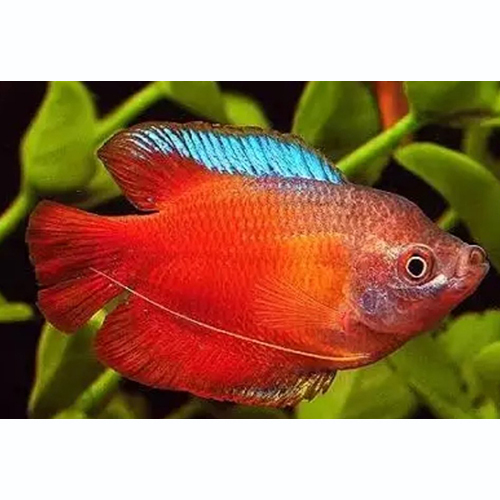
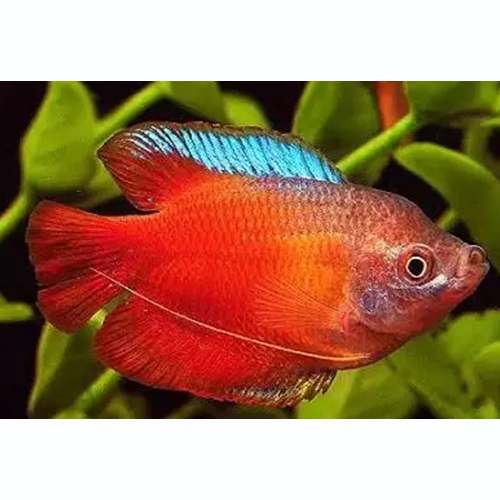
The red lily gourami isa type of dwarf gourami fish with a bright red body and blue dorsal fins.It is a freshwater fish native to the Indian subcontinent, Bangladesh, and Pakistan.
- Size:Dwarf gouramis are one of the smallest gourami species.Males are slightly larger than females.
- Color:Males are bright orange-red with turquoise-blue stripes, while females are silvery blue-gray.
- Fins:Have long filamentous rays extending from each pelvic fin
- Red lily gouramis do best in heavily-planted tanks with lots of shade and hiding places.
- They prefer water with good flow and low oxygen levels.
- They are shy fish, so it's important to provide enough hiding places to protect females from male harassment.
- Red lily gourami's are omnivorous and can eat tropical flakes, color flakes, shrimp pellets, and tropical granules.
- Frozen and live foods can be given as treats or to encourage spawning.
- Rotate their diet daily and only feed them what they can eat in under two minutes.
- Ensure the water quality is good.
Brilliant Red Coloration for Stunning AquascapesRed Lily Fish are celebrated for their vivid red hue, which brings a captivating highlight to any aquarium or aquascaping project. Their lively movement adds a dynamic aspect, making them an excellent decorative choice for both home and office tanks. Their adaptability to tank ornaments, plants, and substrate enhances their visual appeal and allows for creative aquascape designs.
Effortless Care and CompatibilityKnown for their hardy nature, Red Lily Fish are easy to care for, making them perfect for beginners and seasoned aquarists alike. Their peaceful disposition ensures harmonious coexistence with other community fish. They thrive best in water temperatures of 22-28C and pH levels between 6.5 and 7.5, and standard aquarium filtration will keep them thriving.
FAQ's of Red Lily Fish:
Q: How should I acclimate Red Lily Fish after receiving them via live fish shipping?
A: Upon arrival, float the sealed bag in your aquarium for 15-20 minutes to match temperatures. Gradually introduce small amounts of tank water into the bag every 5 minutes before gently releasing the fish into the tank. This process minimizes stress and helps the fish adapt smoothly to their new environment.
Q: What types of food are suitable for Red Lily Fish and how often should they be fed?
A: Red Lily Fish are omnivores and readily accept flake, pellet, and live food. For optimal health, feed them 2-3 times daily in small portions they can consume in a few minutes, ensuring a balanced diet and minimizing waste in the tank.
Q: When is the best time to add Red Lily Fish to an aquarium?
A: Red Lily Fish can be introduced once your aquarium is fully cycled with stable water parameters (temperature: 22-28C, pH: 6.5-7.5) and adequate filtration. Adding them after establishing a stable environment helps reduce stress and supports their health.
Q: Where can Red Lily Fish be kept for decorative purposes?
A: They are suitable for placement in both indoor and outdoor aquariums, including home fish tanks, office displays, and aquascaping setups. Their bright color and active swimming make them an attractive feature in any setting.
Q: What are the benefits of having Red Lily Fish in a community tank?
A: Red Lily Fish exhibit peaceful behavior, making them excellent companions for other non-aggressive fish species. Their hardy and adaptable nature contributes to the overall stability and beauty of a community aquarium, while their movement enhances visual appeal.
Q: How many Red Lily Fish can be kept in a tank, and what tank size is recommended?
A: Tank capacity relies on the aquarium's size. A general guideline is one Red Lily Fish per 5-8 liters (1.3-2 gallons) of water, ensuring ample space and clean water with standard filtration. Always avoid overcrowding for healthier, stress-free fish.
Q: What aquarium accessories are compatible with Red Lily Fish?
A: Red Lily Fish thrive with aquatic plants, suitable substrates, and common ornaments. Providing such accessories not only enriches their environment but also supports their activity and natural behavior.
 Send Inquiry



 Send Inquiry

 Send Inquiry